
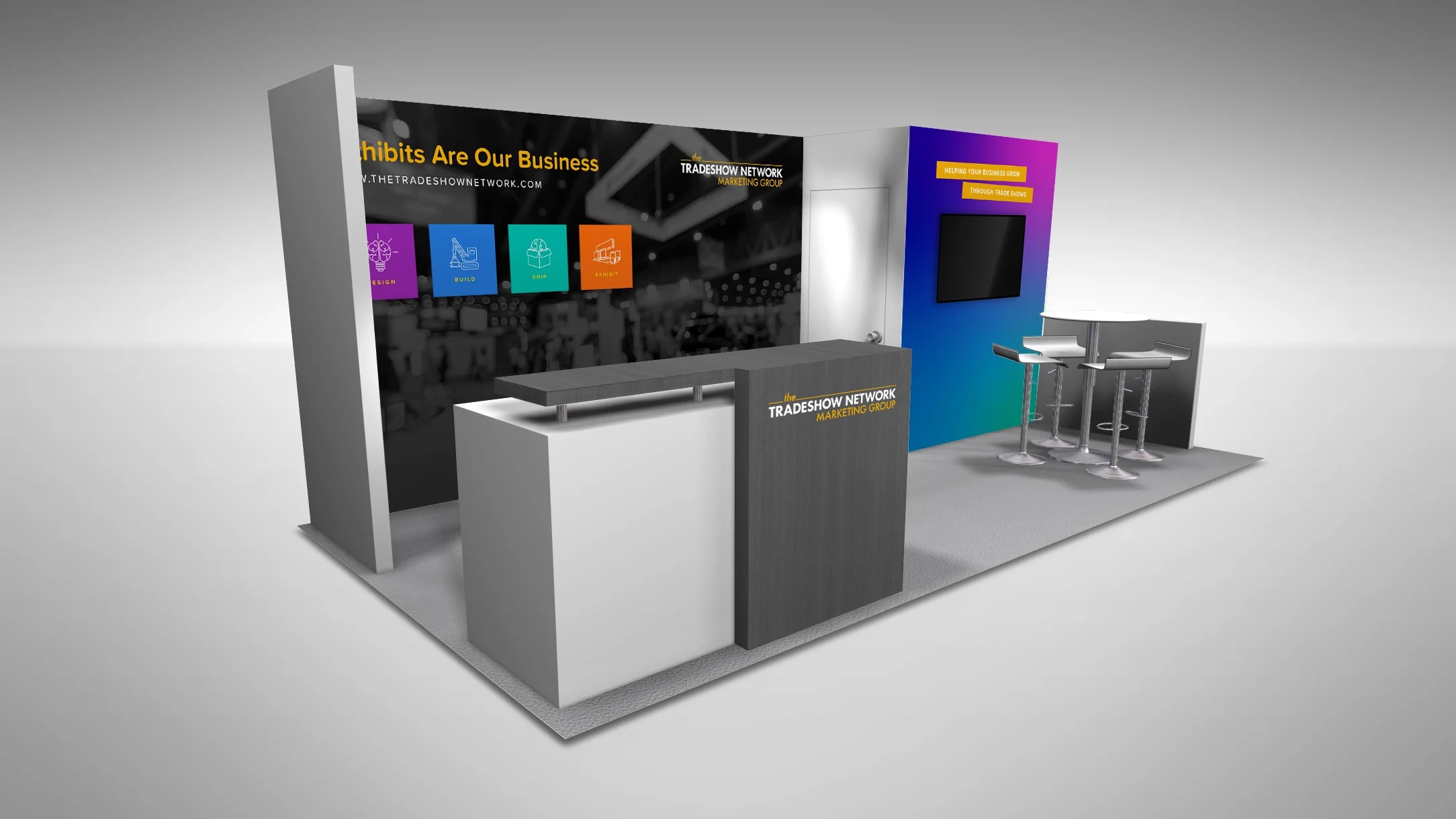
The backwall is the anchor of most exhibits and the backdrop is the brand wall behind every sponsor photo, and both need handling that protects large tensioned graphics. Trade Show Logistics of Tampa coordinates the freight, careful handling, install sequence, and reuse of SEG fabric walls, pop-ups, and step-and-repeat backdrops so the largest graphic surface in the program looks flawless across Tampa's convention, hotel, and casino venues.
The backwall is the booth's anchor
On almost every exhibit, the backwall is the first thing an attendee sees and the surface that carries the brand. A SEG fabric wall, a pop-up, or a hard-panel backdrop defines the stand, and everything else dresses in front of it. That makes the backwall the piece whose logistics matter most: if it arrives creased, damaged, or incomplete, the whole booth reads wrong no matter how good the rest is.
Trade Show Logistics of Tampa plans the backwall as the centerpiece of the freight and install. Whether it anchors an inline booth at the Tampa Convention Center's 200,000-square-foot hall or forms the backdrop for a sponsor event at a hotel or the Seminole Hard Rock, the wall gets the handling, sequence, and protection that the most visible surface in the program deserves.
Handling large SEG and fabric graphics
SEG fabric walls and large tension graphics are easy to damage and easy to wrinkle. The fabric has to be packed so it does not crease, the aluminum frame extrusions have to travel without bending, and the silicone-edge graphics need protection from snags. Loose or under-packed backwall freight is how a brand wall shows up with fold lines down the middle on the morning of a Tampa show.
We pack backwalls in cases sized to protect both the frame and the fabric, route them through advance-warehouse receiving where the graphics can be inspected, and give large fabric pieces time to relax before install so they tension up smooth. Catching a damaged frame or a misprinted panel a week early, while a fix is still possible, protects the most prominent surface in the booth.
Pop-ups, hard panels, and the right format
Backwalls come in several formats, and each handles differently. Pop-up walls assemble fast but have hinged frames and magnetic graphics that need care; hard-panel backdrops are heavier and more rigid; SEG fabric systems are lighter but depend on clean tensioning. The logistics plan has to match the format, because a pop-up, a fabric wall, and a panel system each ship, set, and strike on different terms.
We plan the freight and install around the specific backwall the exhibitor is bringing rather than a generic approach, so a quick pop-up program is handled lean while a large SEG or panel wall gets the crew and sequence it actually needs. That fit keeps a small backdrop from being over-handled and a large one from being rushed.
Step-and-repeat for sponsor and media moments
Step-and-repeat backdrops are a distinct job. These are the branded walls behind press photos and sponsor activations, often at hotel events, galas, and casino programs rather than on a convention floor, and they have to look perfect because they end up in every photo. A wrinkled or crooked step-and-repeat is a visible problem in published images, so the stakes are different from an exhibit backwall.
We handle step-and-repeat logistics for Tampa sponsor and media events with that visibility in mind: the graphic ships protected, arrives with time to smooth, and the stand or frame is set level and tensioned cleanly. For events at properties like the Seminole Hard Rock or downtown hotels, we confirm the venue's setup access so the backdrop is ready before the cameras are.
Setting the wall first
Install sequence on any booth starts with the backwall. The anchor wall goes up first so the rest of the stand can dress in front of it, and a backwall that is set late forces the crew to work around an empty back of the booth and rush the most visible piece. We sequence the build so the wall is up, tensioned, and inspected before counters, lighting, and product go in.
That order also protects the graphic. A backwall set first and left clean is less likely to be scratched or smudged than one wrestled into place after the booth is full of other components. We document the sequence so the crew sets the anchor wall correctly the first time and the rest of the install follows from a finished backdrop.
Venue rules for large wall structures
A large backwall can trigger venue considerations a small graphic does not: height limits on inline booths, line-of-sight rules, and rigging if any part of the wall or a header is suspended. The Tampa Convention Center and hotel venues each have their own rules on these, and a tall or hung backwall element has to be confirmed against them ahead of time.
We read the show manual or the venue's event rules, check the backwall's height and any rigging against them, and order the labor or rigging the structure needs. That keeps a large anchor wall compliant whether it sets on a convention floor with formal exhibitor services or in a hotel ballroom hosting a sponsor program.
Show-site supervision for the brand wall
Because the backwall carries the brand and is the booth's most visible surface, it warrants show-site attention. Someone needs to confirm the wall arrived undamaged, oversee a clean install and tensioning, and verify the finished wall reads right before sign-off. We provide that supervision so the anchor of the stand is not left to chance on a busy floor.
That presence also protects the strike, when large fabric and frames are easy to damage in a rushed teardown. With supervision on both ends, the backwall is set, inspected, struck, and repacked under the same standard, which keeps a high-visibility graphic asset crisp across a season of Tampa shows.
Strike, repack, and graphic protection
The strike on a backwall is where graphics get creased and frames get bent if the teardown is careless. SEG fabric has to be removed and folded properly, frames broken down in order, and everything returned to the right case so the wall comes home in reusable condition. We keep the dismantle as disciplined as the install to protect the graphic.
We coordinate the empty-crate return and outbound freight so the backwall leaves Tampa packed to standard and arrives back intact. Tracking the fabric and frame condition between shows protects an asset that is both expensive to reprint and central to the booth, which matters for exhibitors reusing a backwall across many Gulf Coast events.
A flawless anchor wall, every time
The backwall and backdrop are the surfaces that decide whether a booth or a sponsor wall looks professional, so a wrinkle or a delay there is the most visible failure in the program. Trade Show Logistics of Tampa removes that risk by treating the anchor wall as the protected, sequence-first centerpiece of every install.
For Tampa exhibitors and sponsors investing in SEG walls, pop-ups, and step-and-repeat backdrops, the result is a brand surface that arrives clean, sets first, tensions smooth, and reads sharp in person and in photos. Getting the largest graphic right, show after show, is what makes the whole exhibit look intentional.